ADHD
Pomodoro for ADHD: why 25/5 fails and what works instead
Why the classic 25-minute Pomodoro timer can backfire with ADHD, what the research really says, and four flexible alternatives that protect your focus.
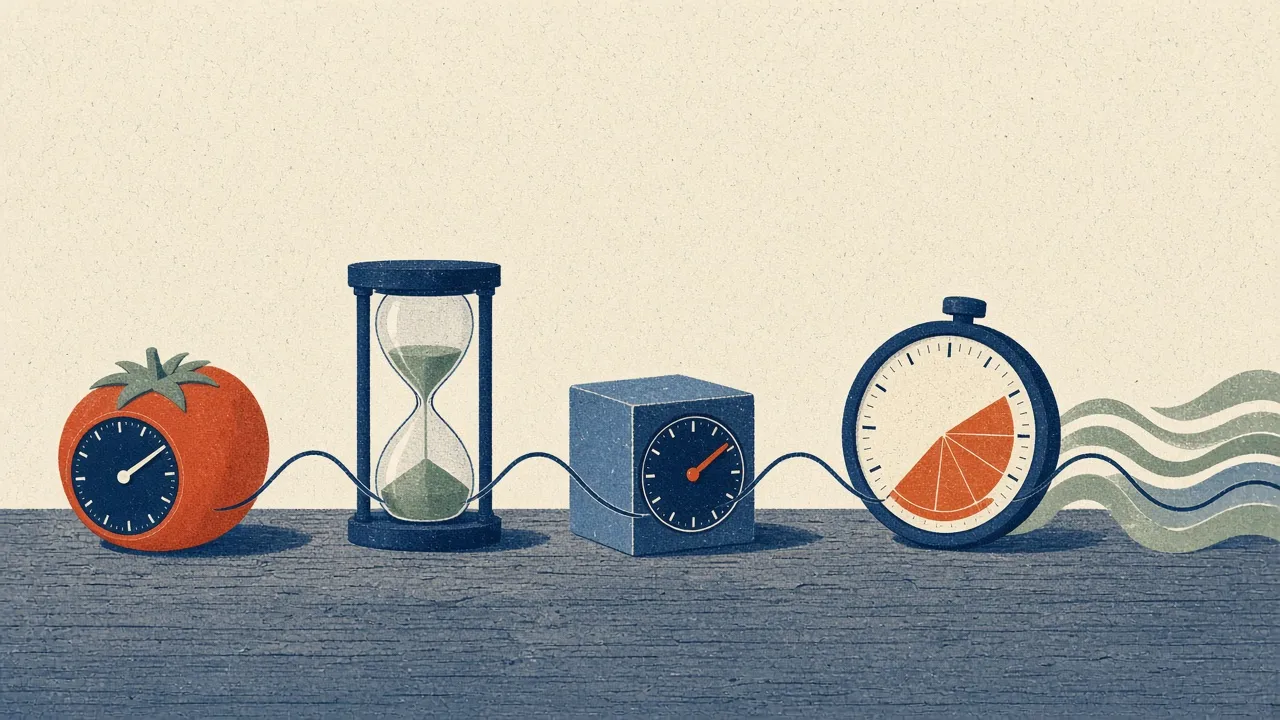
The buzzer goes off at minute twenty-five. You only just got going. You'd spent forty minutes staring at a spreadsheet, then finally something clicked, and now a tomato-shaped timer says stop. You take your five-minute break, open your phone, and lose the thread completely.
Plenty of people with ADHD know this loop. The 25-minute sprint with a 5-minute break gets sold as the default way to focus, so when it doesn't work, it feels like your fault.
It usually isn't. The method wasn't designed with ADHD in mind, and for some of us the fixed schedule creates more friction than it removes.
Why does Pomodoro backfire for ADHD?
Francesco Cirillo, then an Italian university student, developed the technique in the late 1980s using a tomato-shaped kitchen timer. The rules: pick a task, work 25 minutes, take 5 off, and after four rounds take a longer break.
There are clear edges, which some people love. But there are four places where it tends to snag.
1. Getting started takes a while
If starting is the hard part for you (see ADHD paralysis and how to start), the first ten or so minutes of a sprint may go to warming up. Then the bell rings just as you've found your footing.
2. Every switch costs something
Executive function differences can make shifting between tasks harder. A two-hour Pomodoro session means several stops and restarts. Each one is another chance for the thread to snap.
3. Five minutes is an awkward break
It's too short for a real walk and just long enough to pick up your phone. Once a feed has you, five minutes can turn into thirty. If that's you, our piece on why you can't stop scrolling covers what's going on.
4. It can interrupt hyperfocus
Hyperfocus is the state of complete absorption where you tune out everything else. A 2021 review in Psychological Research by Brandon Ashinoff and Ahmad Abu-Akel notes it's often mentioned in the context of ADHD, but that it's poorly defined and under-studied. Still, many people with ADHD recognize it. Breaking it up because a timer hit twenty-five isn't obviously a win.
What does the research say about Pomodoro?
Less than the productivity blogs suggest.
We didn't find any trials of the Pomodoro Technique in adults with ADHD. What exists comes mostly from students without a diagnosis, and even there the results are mixed.
A 2023 study in the British Journal of Educational Psychology, led by Felicitas Biwer at Maastricht University, followed 87 university students during one day of self-study. Some took systematic breaks (24 minutes of study and 6 off, the "Pomodoro" group, or 12 on and 3 off). Others chose their own. The self-regulating students studied and rested for longer, and reported more fatigue and distraction and less concentration and motivation. Task completion didn't differ.
A 2025 study in Behavioral Sciences (Smits, Wenzel and de Bruin) tested 94 university students during a two-hour study session, comparing self-regulated breaks, Pomodoro and Flowtime. Pomodoro led to a faster rise in fatigue. Both Pomodoro and Flowtime led to a faster drop in motivation than self-chosen breaks. But overall fatigue and motivation levels didn't differ between groups, and neither did productivity, task completion or flow.
So: no clear winner. Both studies were short, online and in students. If you like structure, it can help. If it makes you tense, you aren't broken.
Where does the 52/17 rule come from?
Not from a university lab. DeskTime, a time-tracking software company, analyzed its top 10% most productive users in 2014 (measured by how much time they spent in apps tagged as productive) and found they averaged 52 minutes of work followed by 17 off.
The company repeated the analysis in 2021 and got 112 minutes of work and 26 off. By its own account, that's a snapshot of how some desk workers behaved on particular days, from one company's tracking data. It's not a biological rule.
Alternative 1: The Flowtime technique
Flowtime keeps the idea of work and break but drops the fixed timer. Here's how it works:
- Pick one task.
- Note your start time.
- Work until your focus fades, you hit an obstacle, or you finish a section.
- Note your stop time.
- Take a break sized to how long you worked, with longer sessions earning longer breaks.
If you're on a roll, no alarm interrupts. If you're fading at twenty minutes, you step away without feeling like you failed a sprint. In the Smits study, Flowtime breaks were set by prior study duration in just this way. As a hyperfocus-friendly option, it's the first one we'd try.
The catch: with no timer, it's easy to forget the break and push through. Set a loose ceiling, such as 90 minutes, so you don't run on empty.
Alternative 2: Starter sprints
When a task is boring or overwhelming, twenty-five minutes can feel like a prison sentence. So shrink it.
- Pick a micro-task: four emails, one headline, a single pile of mail.
- Set a timer for ten or fifteen minutes.
- Tell yourself you can stop when it rings, guilt-free.
Once you're past the start, momentum often carries you. If it does, keep going. If not, you still banked ten real minutes.
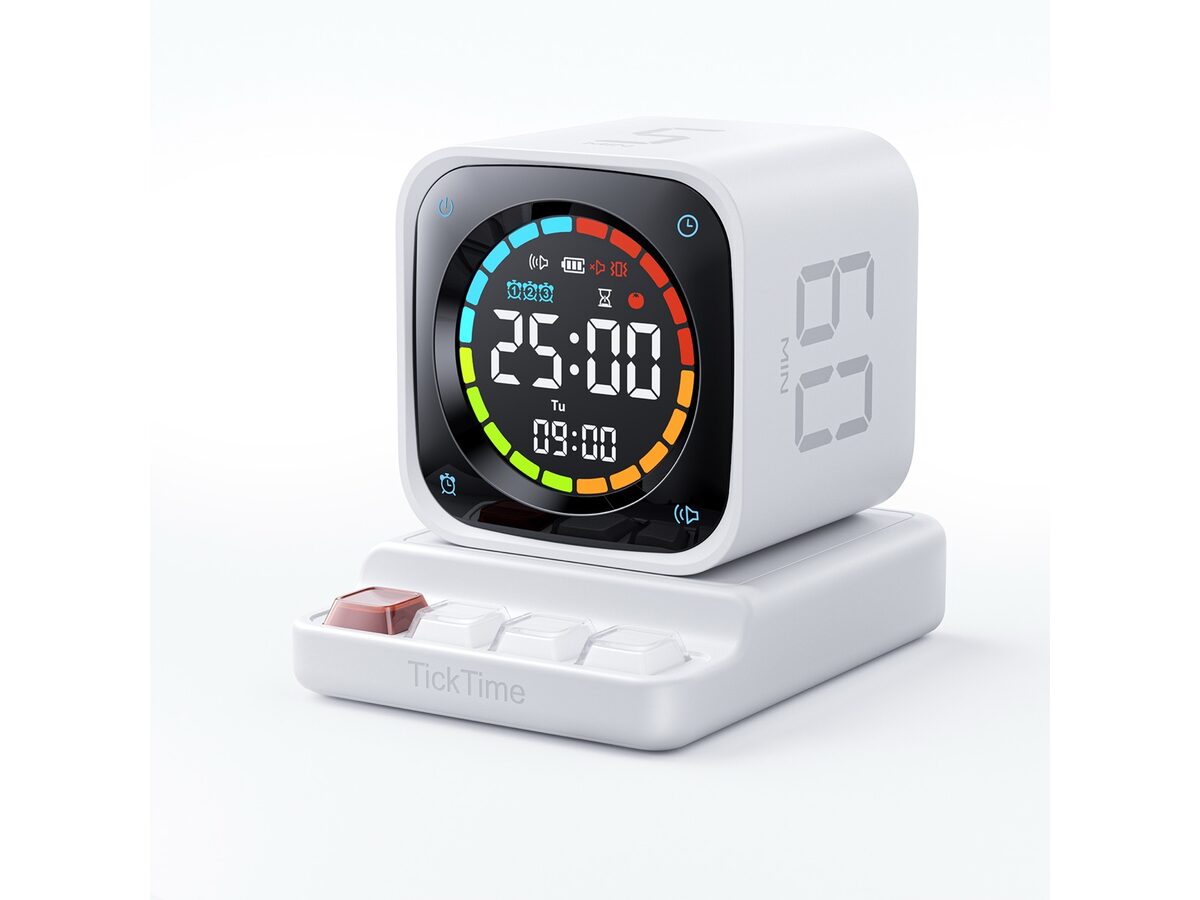
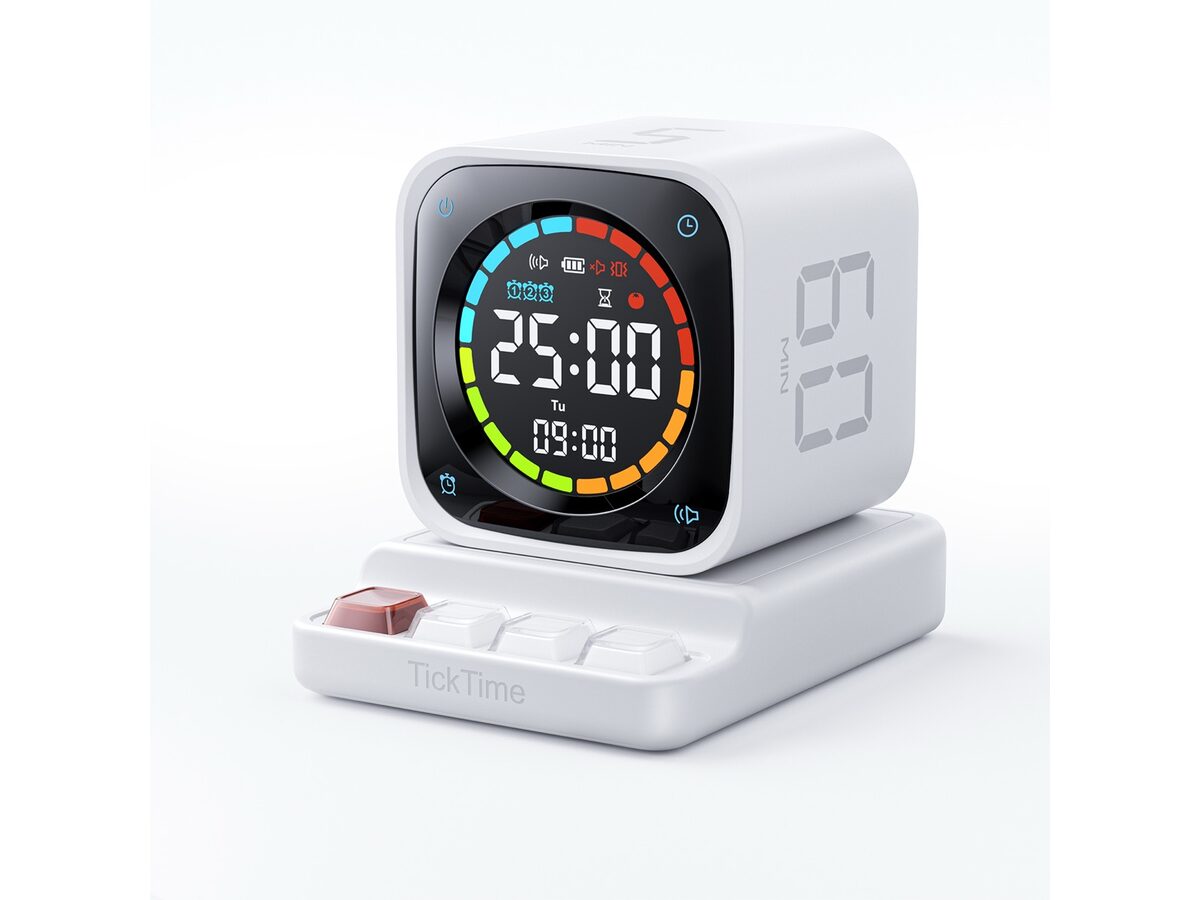
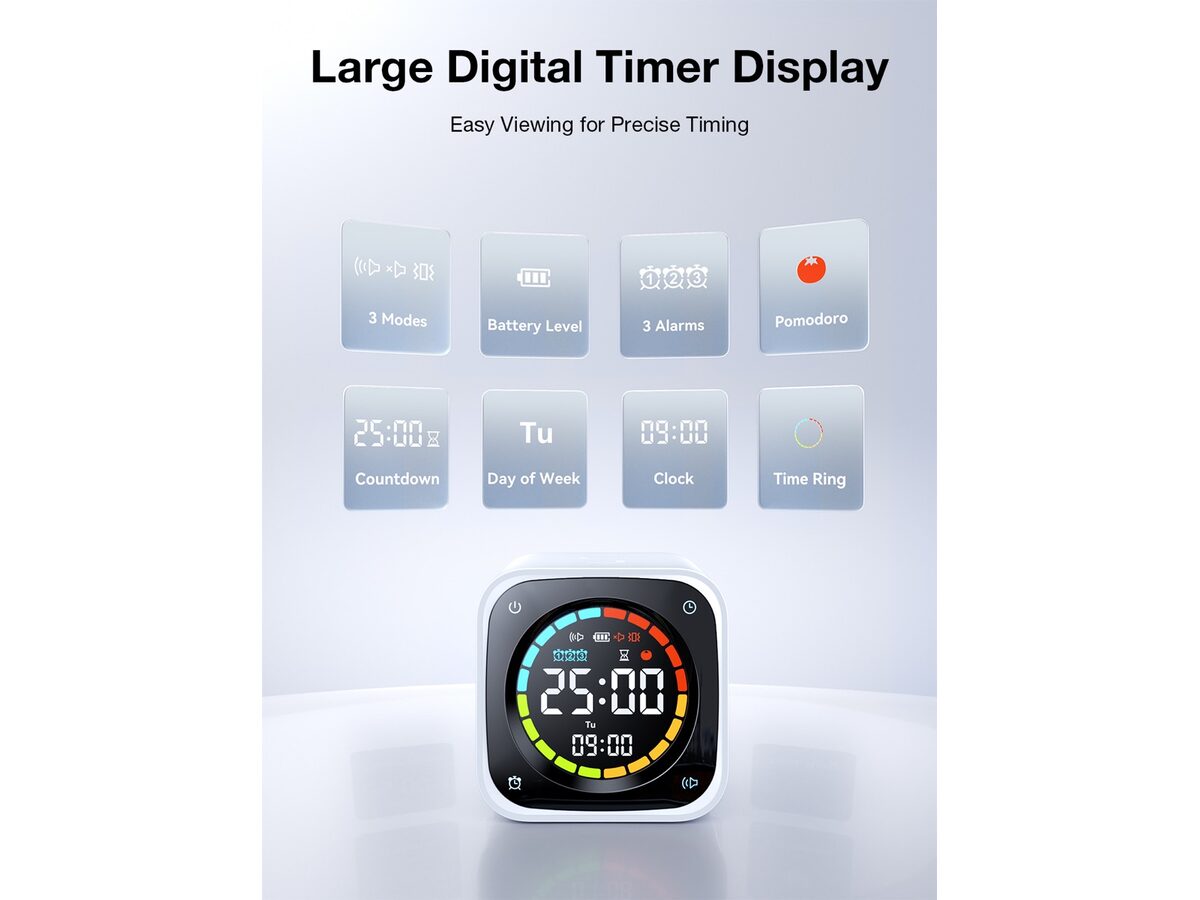
A physical timer helps because there's no phone to open. The TickTime TK3 is a cube-style timer with preset durations of 5, 10, 30 and 60 minutes plus a custom countdown, and it has a silent vibration alert. Flip to 10 and you're running.
-
TickTime TK3
TickTime
Flip the cube to a face for 5–60 minutes—tactile start without opening another app.
TickTime TK3
TickTime
Flip the cube to a face for 5–60 minutes—tactile start without opening another app.
Alternative 3: Pace by task, not by clock
Watching 25:00 tick down can make you check the display every couple of minutes. Task-based pacing drops the clock for milestones:
- Read four pages of the brief, then stretch.
- Format three slides, then get water.
- Reply to two messages, then take a short walk.
You stop when a chunk of thought is done, which makes it easier to resume without losing your place.
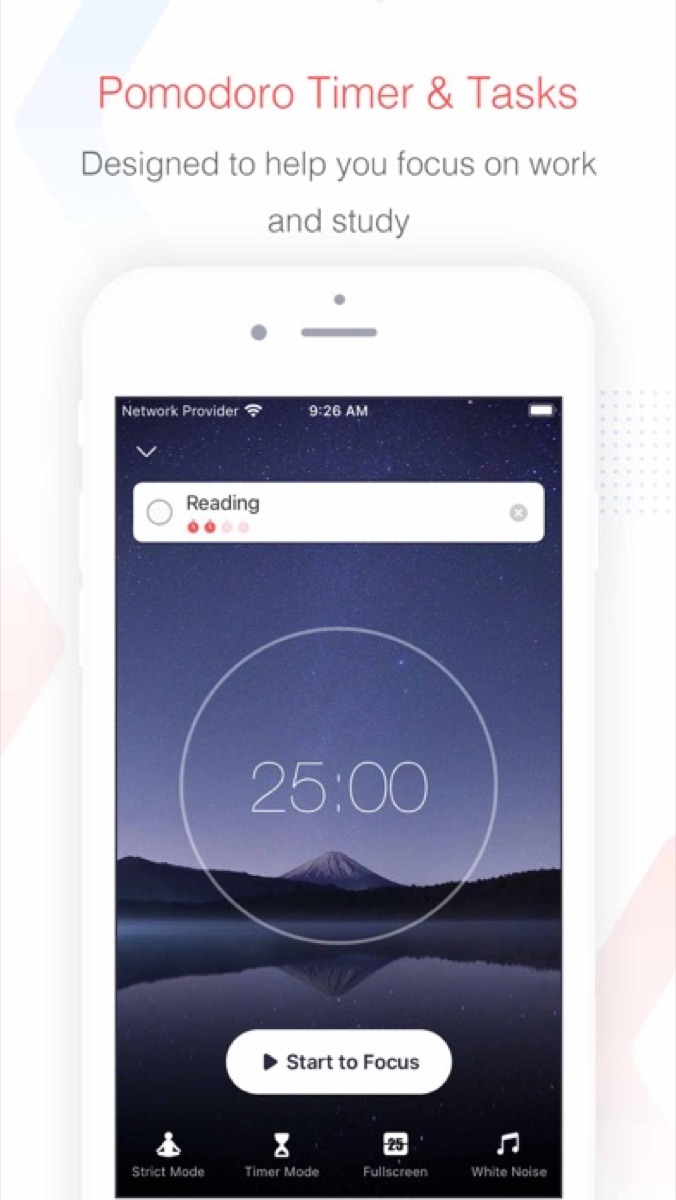
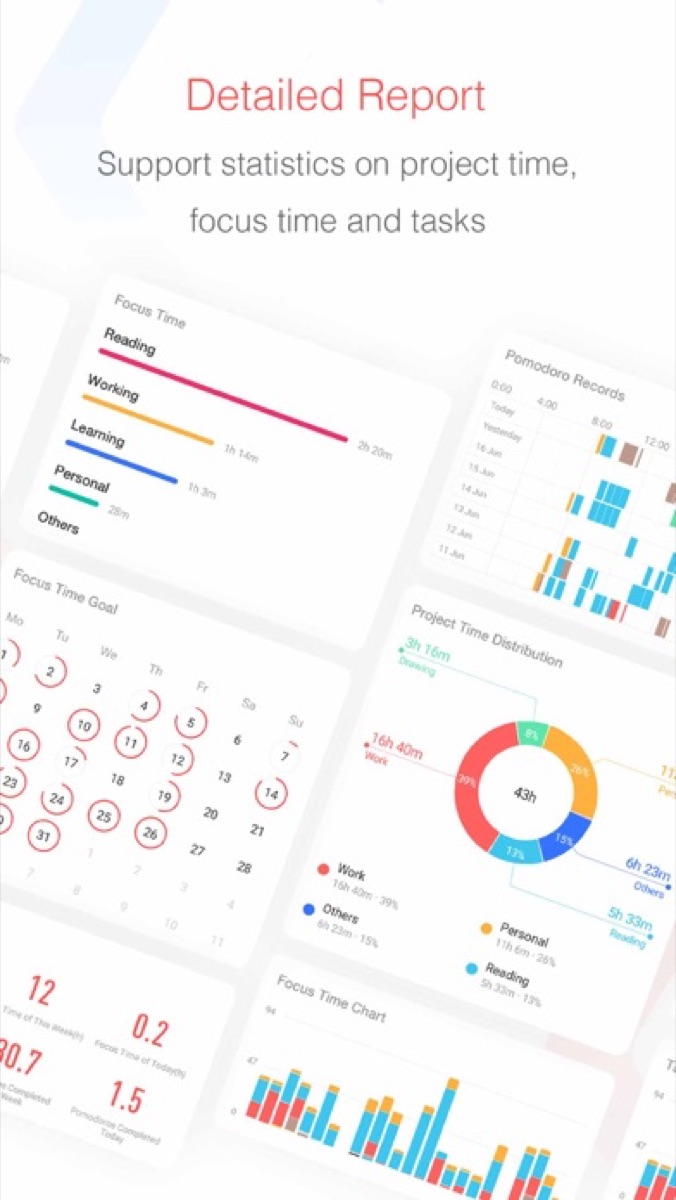
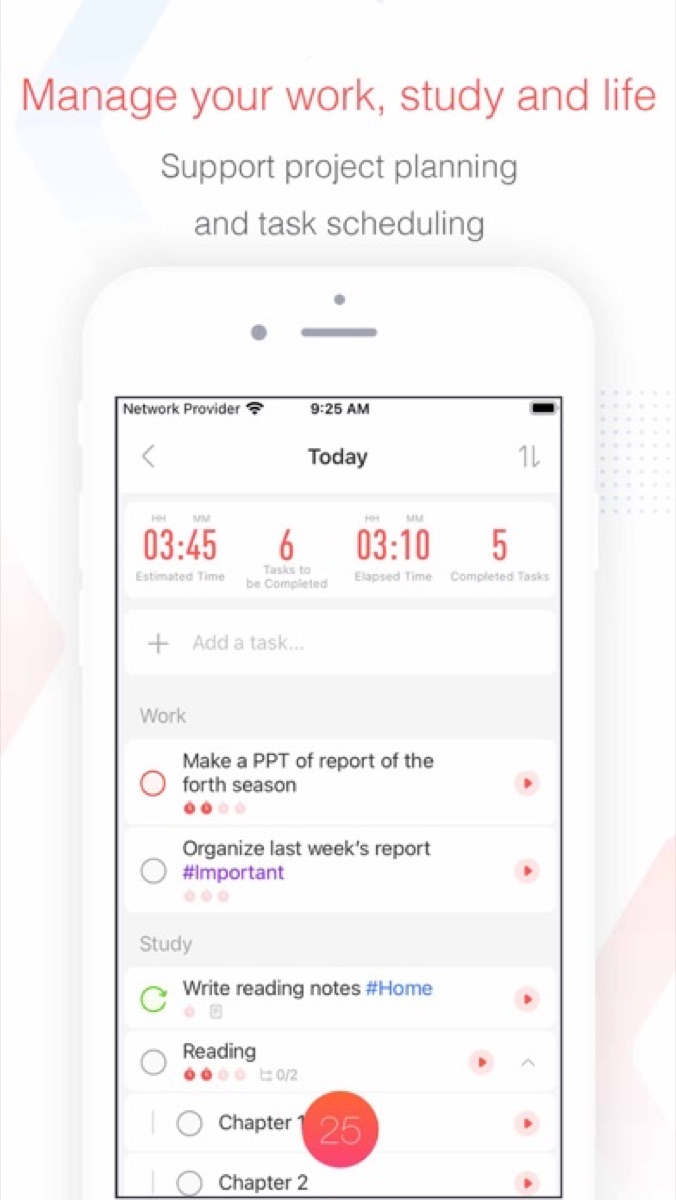
If you want that linked to a checklist, Focus To-Do combines a task manager with focus timers on several platforms. Attaching a timer to a specific item can anchor your attention to the work instead of a generic countdown.
-

Focus To-Do
Super Element
Pomodoro timer tied to a task list—pick what you’re doing, then run the sprint on that item.
Focus To-Do
Super Element
Pomodoro timer tied to a task list—pick what you’re doing, then run the sprint on that item.
Alternative 4: Timeboxing with a visual timer
Pomodoro repeats the same cycle all day. Timeboxing books one block for one project, like 10:00 to 11:15 for the proposal.
This pairs well with ADHD time blindness strategies. Digital numbers don't show how long is left, so a visual timer that shows time as shrinking space is easier on the eyes than a phone alarm.
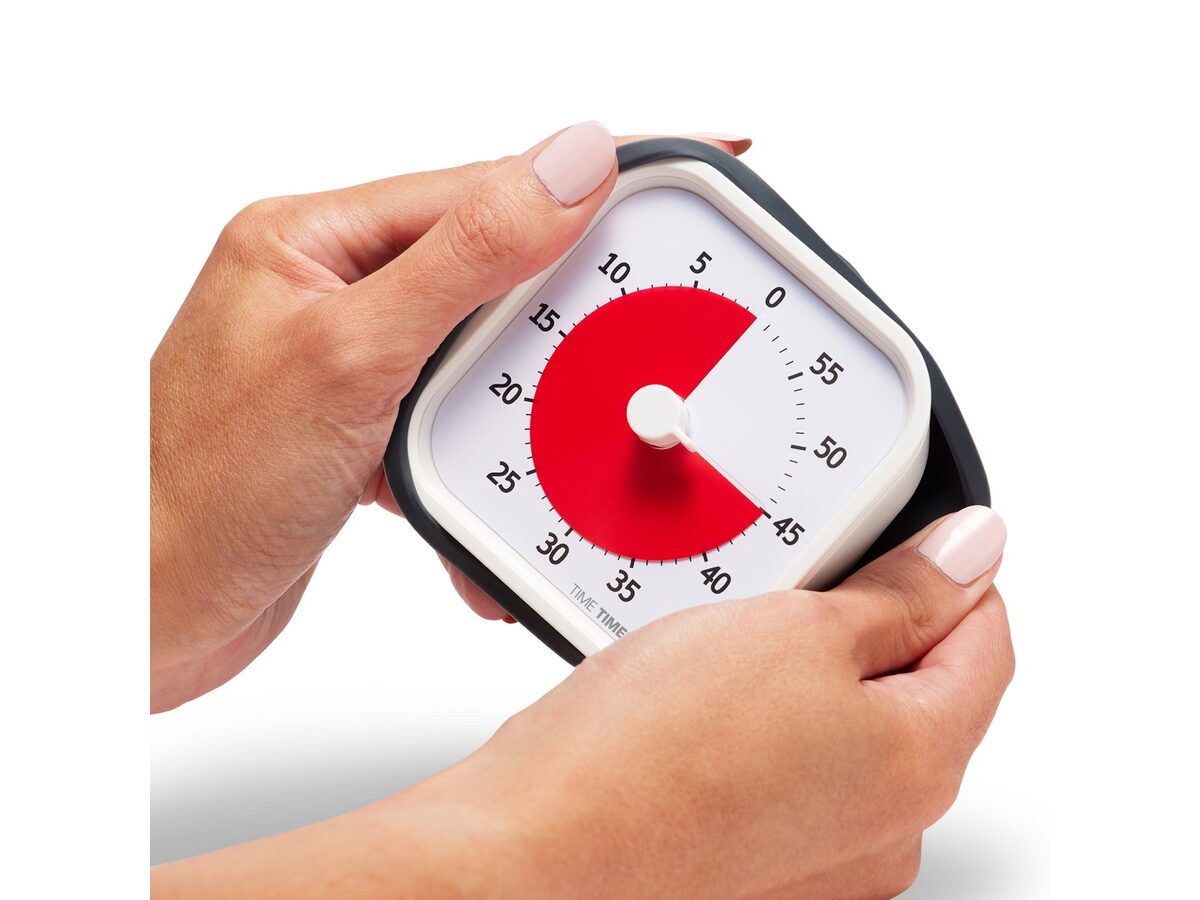
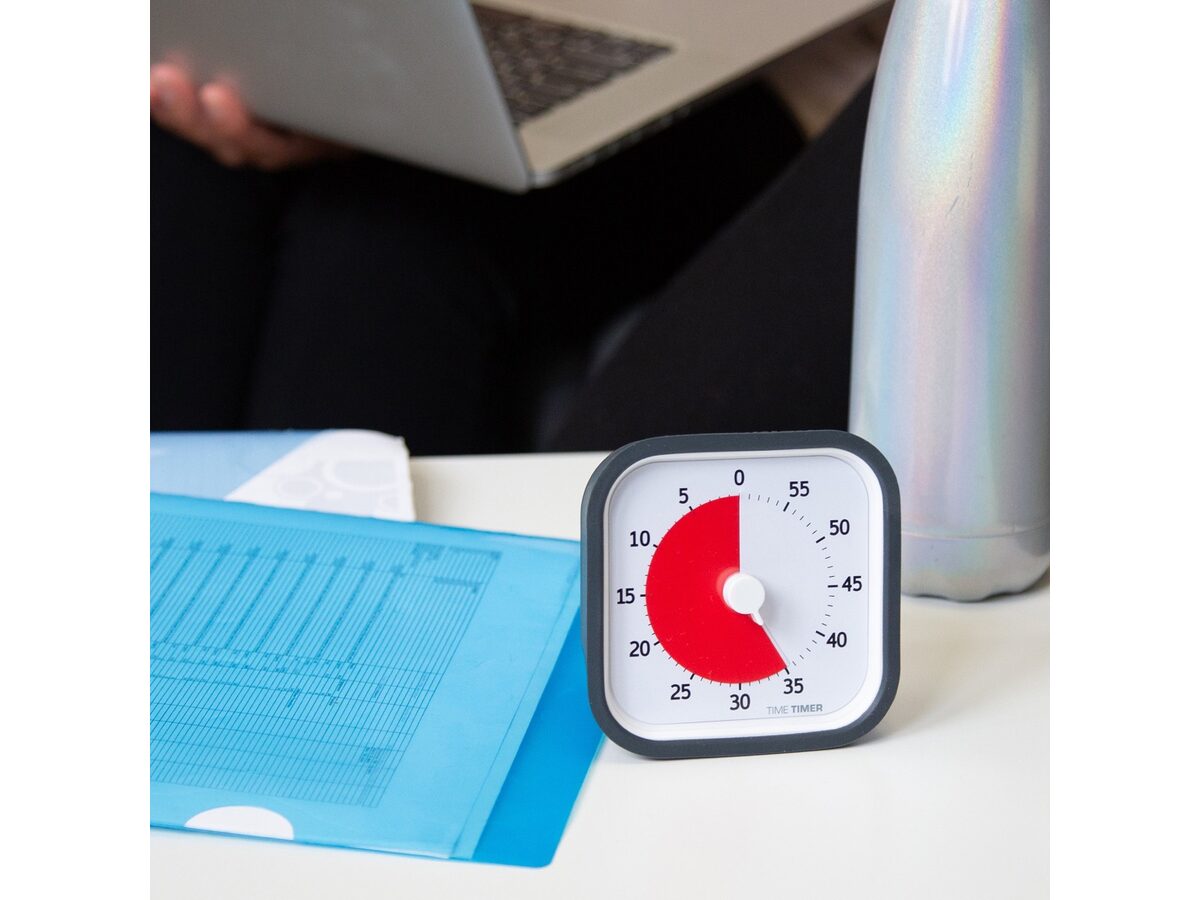
The Time Timer MOD is a desktop visual timer that shows remaining time as a colored disk that shrinks as time passes. You can read it from the corner of your eye without doing subtraction.
-
Time Timer MOD
Time Timer
Shrinking red disk plus a silicone cover—same visual timer idea in a smaller, desk-friendly package.

Time Timer MOD
Time Timer
Shrinking red disk plus a silicone cover—same visual timer idea in a smaller, desk-friendly package.
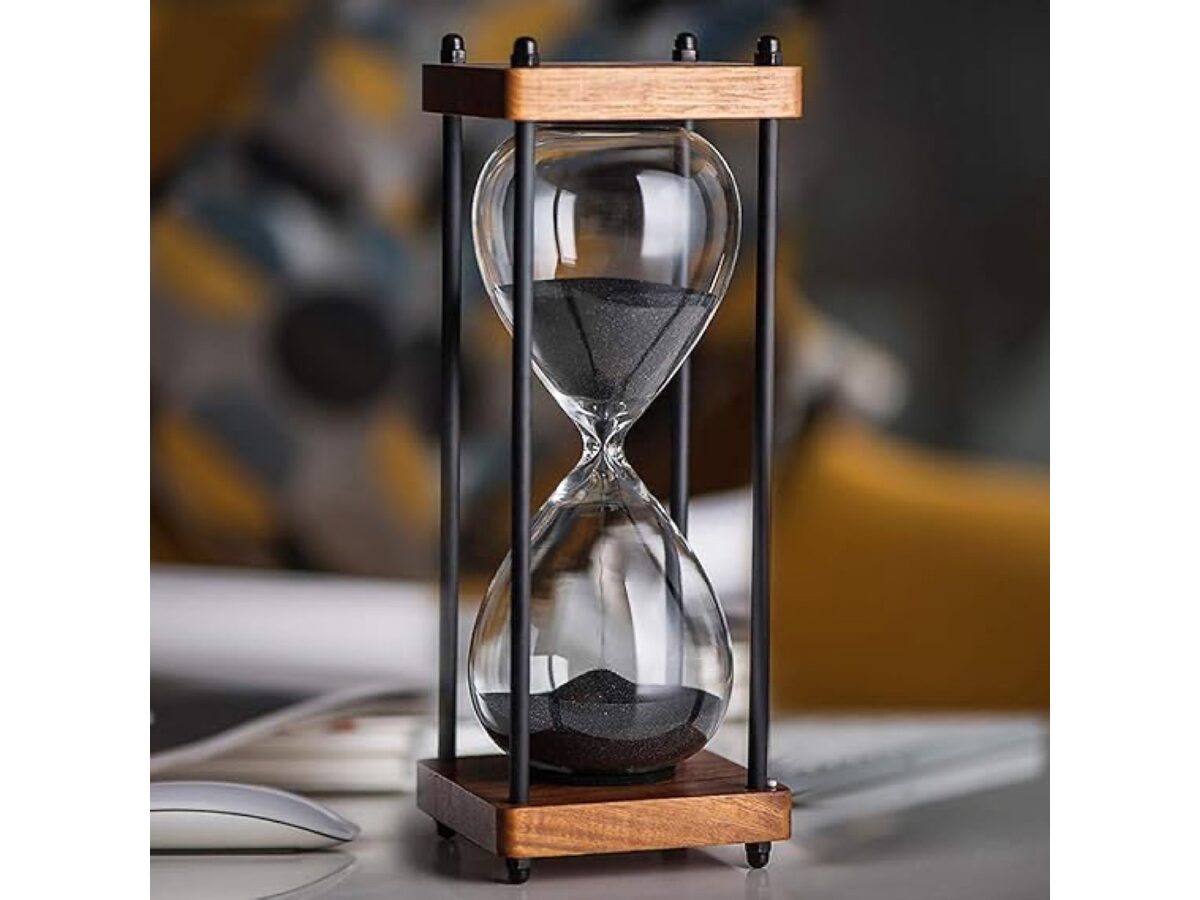
If you want to go fully screen-free, a sand timer does the job. A 30-minute hourglass has no menus and no notifications. Flipping it is a small commitment to one block of work.
-
SAMLONG 30-Minute Hourglass
SAMLONG
Analog sand flow with no buttons—good for one bounded block when screens are the distraction.
SAMLONG 30-Minute Hourglass
SAMLONG
Analog sand flow with no buttons—good for one bounded block when screens are the distraction.
How do you run breaks so you actually come back?
The break is where most systems leak. Step away, and the working memory of the task can evaporate. Three rules help.
1. Skip the feeds
Don't spend breaks on social media, video or news. They're built to hold you, so returning to work feels like a drop. Pour water. Step outside. Stretch your neck for a minute. Wash a cup. Or just close your eyes.
2. Leave a runway note
Before you stand, spend twenty seconds writing your exact next action on an index card:
- "Next sentence: summarize the Maastricht study results."
- "Next step: copy column D into the summary table."
- "Next action: email Sarah about the draft approval."
When you sit back down, you don't have to remember where you were.
3. Get some outside help
If self-pacing keeps slipping, try working next to someone else. Our guide to body doubling for ADHD covers how. You can also browse our visual timers to find one that suits your desk.
FAQ
Why does the Pomodoro Technique make me anxious?
For some people, a ticking clock and an approaching buzzer feel like pressure rather than support. If the timer is a source of stress, that's a good reason to switch to Flowtime, task-based pacing or a quiet visual timer. If anxiety is a wider issue, a clinician can help.
What's the best timer length for ADHD?
There's no universal answer. For dull or daunting tasks, a 10 to 15 minute starter sprint can lower the barrier. For absorbing work, longer blocks of 45 to 60 minutes may suit you better. Experiment and keep what works. The studies above found no single best interval.
How is Flowtime different from Pomodoro?
Pomodoro uses fixed intervals, typically 25 minutes of work and 5 of rest, enforced by a timer. In Flowtime, you decide when to stop based on your focus, and the break length depends on how long you worked.
Can I change Pomodoro to 50 minutes on and 10 off?
Yes. Many people use 50/10 or 45/15. If longer blocks match your work and you can return from breaks smoothly, adjust the numbers.
Sources
- Hyperfocus: the forgotten frontier of attention (opens in a new tab) – Psychological Research, 2021
- Understanding effort regulation: Comparing 'Pomodoro' breaks and self-regulated breaks (opens in a new tab) – British Journal of Educational Psychology, 2023
- Investigating the Effectiveness of Self-Regulated, Pomodoro, and Flowtime Break-Taking Techniques Among Students (opens in a new tab) – Behavioral Sciences, 2025
- Does the 52-17 rule really hold up? (opens in a new tab) – DeskTime Blog, 2024
- TickTime TK3 Pomodoro Timer Cube (opens in a new tab) – TickTime, 2026
- Focus To-Do - Pomodoro Technique & Tasks (opens in a new tab) – Super Element, 2026
- Time Timer MOD User Guide (opens in a new tab) – Time Timer, 2026
This guide is general information, not medical advice. If focus problems are getting in the way of work, school, or relationships, talk with a doctor or licensed clinician.