ADHD
Does body doubling ADHD actually work? What research shows
How body doubling ADHD helps you start hard tasks, what the small 2024 to 2025 studies say, and how to try it online or with a friend.
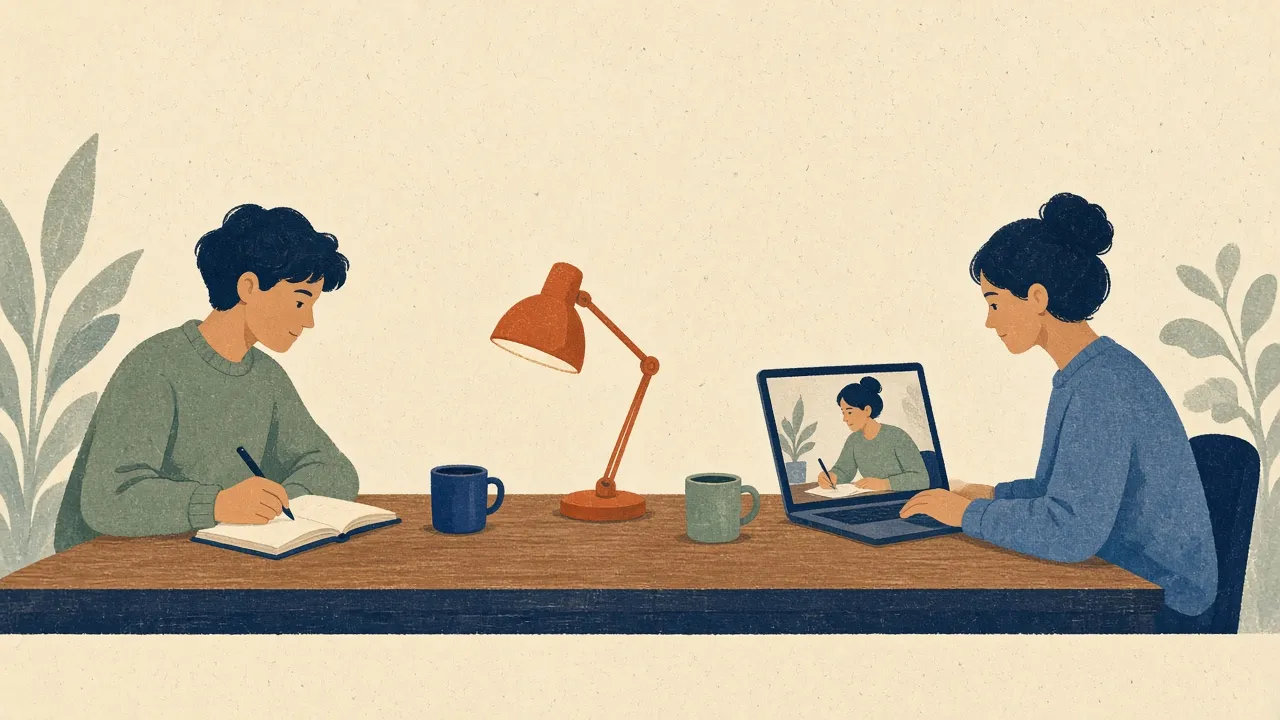
You're at your desk with twenty-seven browser tabs open, an overdue invoice on screen, and for some reason you can't type. Two hours go by. You reorganize a bookshelf. You clear notifications.
Then a friend hops on video to fold laundry, or a coworker sits down at the kitchen table with a laptop. You don't even talk about your project. The static clears, and you finish the invoice in twelve minutes.
That's body doubling for ADHD. It sounds clinical, but the term came from a coach's observation in 1996, not a lab. Today it covers everything from library tables to dedicated virtual coworking sites.
What is body doubling for ADHD, and where did it start?
Body doubling is doing a task while someone else is present. They don't instruct you, manage your schedule or judge your work. They're just there, in the room or in a video window.
The term goes back to 1996 and ADHD coach Linda Anderson. In her account, republished by the Attention Deficit Disorder Association (ADDA), she describes a client named David, a retired corporate vice president. He was well organized and had the time and will to do his paperwork. He just couldn't stay on track. David told her that if his wife sat in a chair nearby, he got more done than when he was alone. Anderson recognized the same effect in other clients and named it the body double. She's clear that there's no research to prove it works.
It spread through coaching circles and support groups for years before blowing up on TikTok, Reddit and Discord. People now use it for taxes, coding, dishes and clutter.
Why might body doubling work?
Nobody has pinned down the mechanism for ADHD specifically. There are a few reasonable explanations.
Social facilitation
The oldest idea is social facilitation: the observation that people perform differently when others are around. Norman Triplett is often credited with an early version in 1898, noting that cyclists rode faster in company. In a 1965 paper in Science, Robert Zajonc argued that the presence of others raises arousal, which helps with well-practiced responses.
A 1983 meta-analysis in Psychological Bulletin by Charles Bond and Linda Titus covered 241 studies. Social presence tended to improve speed and accuracy on simple tasks and hurt performance on complex ones.
That fits what many people with ADHD describe. Folding clothes or sorting receipts isn't conceptually hard. Getting started is. A quiet person nearby may give just enough of a nudge. That's a theory, not a proven mechanism in ADHD.
Outsourced structure
Michael Manos, a behavioral health specialist at the Cleveland Clinic, calls body doubling a form of external executive functioning, like having an assistant nearby. Alone, you handle all the pacing and boundaries yourself. If your mind wanders, nothing pulls it back. Seeing someone else typing can.
Accountability without the shame
"Did you finish that yet?" lands badly for many adults with ADHD. Body doubling skips the interrogation. You say what you're doing, work quietly, and check in at the end. You stay in your chair because they stay in theirs.
If you can't even get to the desk, it's worth reading about ADHD paralysis to figure out whether the block is overwhelm or an unclear first step.
What does the research actually show?
Less than TikTok implies. Until recently almost no peer-reviewed work looked at body doubling by name.
In 2024, Tessa Eagle, Leya Breanna Baltaxe-Admony and Kathryn Ringland published a survey of 220 neurodivergent people in ACM Transactions on Accessible Computing. It's an exploratory survey, not a test of effectiveness. Many respondents had used the strategy for years before they learned it had a name. They described using it at cafés and with YouTube videos, for studying, working, doing dishes, cleaning and exercising, and mainly to build momentum and stay on task.
In 2025, Ryan Schuenke, Sidney Dickenson and Meredith Moore presented a small exploratory study at the ACM ASSETS conference. It had 26 participants, including neurotypical adults and adults with ADHD, some medicated and some not. Each person took two ACT reading comprehension tests, one with a body double and one alone, while EEG headsets recorded focus and calmness measures.
There were no statistically significant differences between conditions. The authors didn't see consistent negative effects, and noted promising trends in unmedicated participants with ADHD. They concluded that body doubling looks like a safe strategy that deserves more research.
With a sample that small, it's a hint, not evidence. No randomized trial has shown body doubling to be a treatment, and it doesn't replace medication, therapy or coaching. But if it helps you finish paperwork, you don't need a trial to keep doing it.
Four ways to body double
Pick based on your social energy and what you're working on.
1. In person
Share a space with a friend, partner or colleague. You don't need the same project. One of you does finances while the other reviews notes. The rule is silence during the work block, because chatting about the weekend turns it into a social visit.
Libraries and coffee shops give you a looser version. Strangers reading and typing around you can make a video game feel like a worse idea.
2. Scheduled one-on-one video
Focusmate is the best known option. It pairs you with a partner for 25, 50 or 75 minutes on video. You book a slot, join in your browser, state your goal, and work with your camera on.
The company says it has a free plan with three sessions a week and no credit card, and an unlimited Plus plan at $8 a month billed annually or $12 monthly. Sessions run around the clock, so a 6 am inbox session is possible.
3. "Study with me" videos
If a live camera makes you anxious, recorded or streamed sessions are zero-pressure. YouTube has thousands of videos where someone studies in near silence for hours, often with lofi beats or rain sounds. Twitch and TikTok have live versions.
A recording can't hold you accountable. Still, watching someone work calmly can settle a restless mind.
4. Group rooms
Many ADHD communities and Discord servers host drop-in focus calls. Everyone stays muted, and people post goals and finished chores in text chat.
What gear keeps a session on track?
A body double supplies presence. Desk tools stop the hour from drifting.
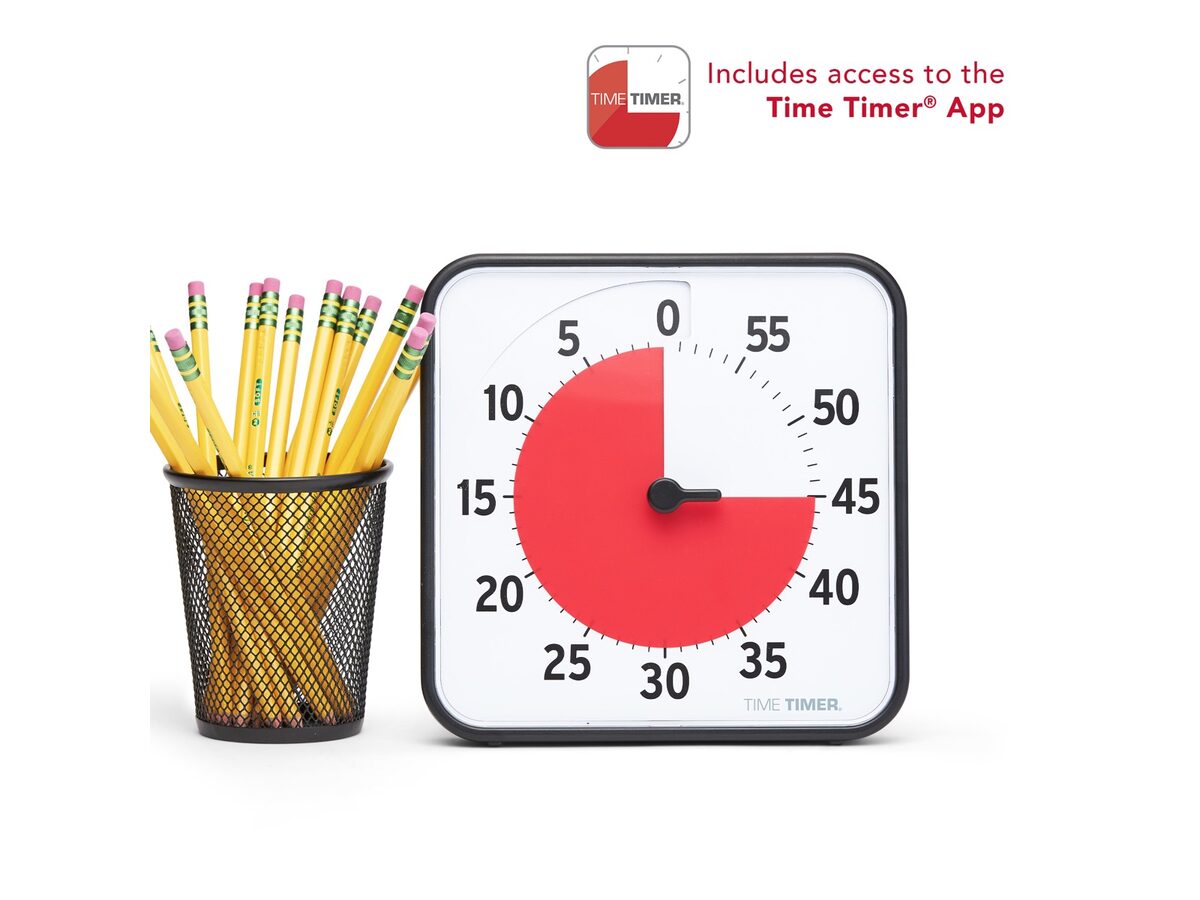
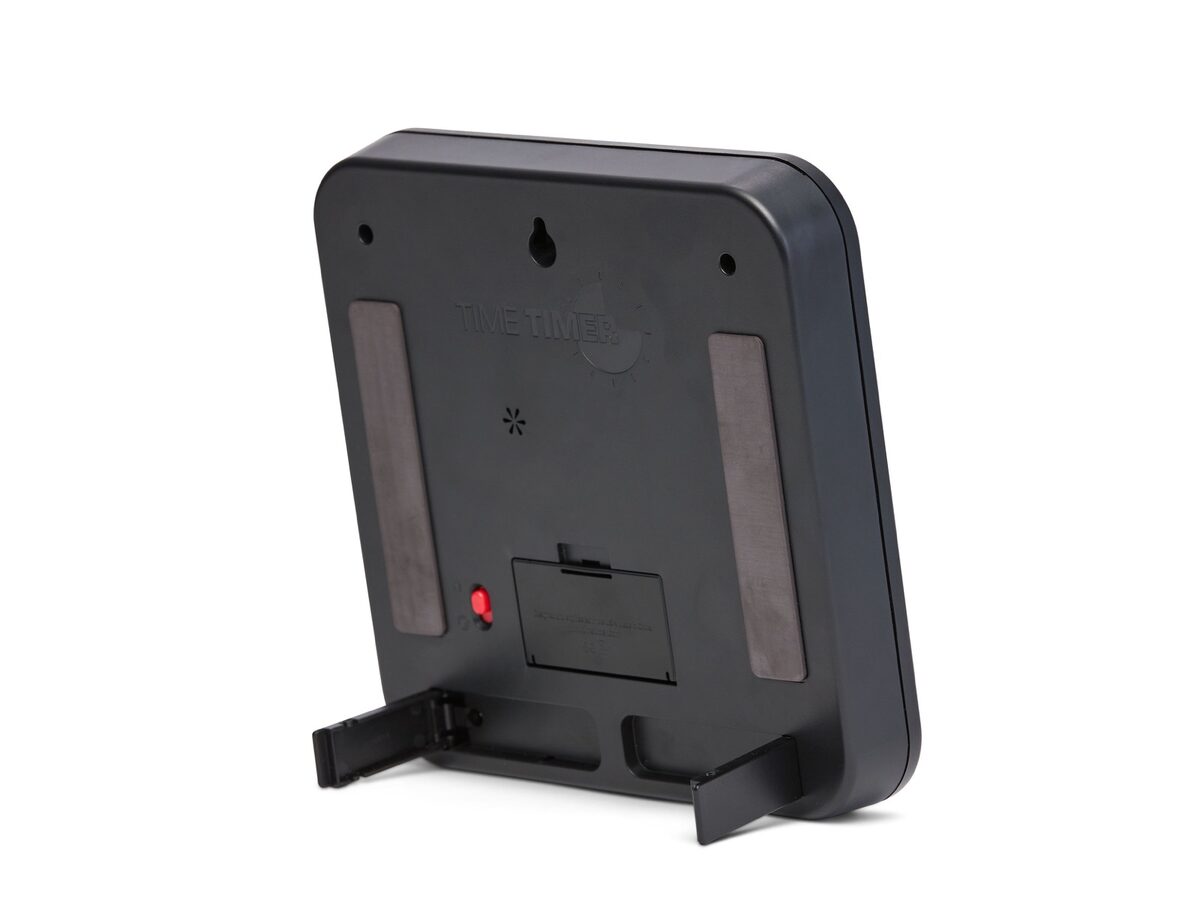
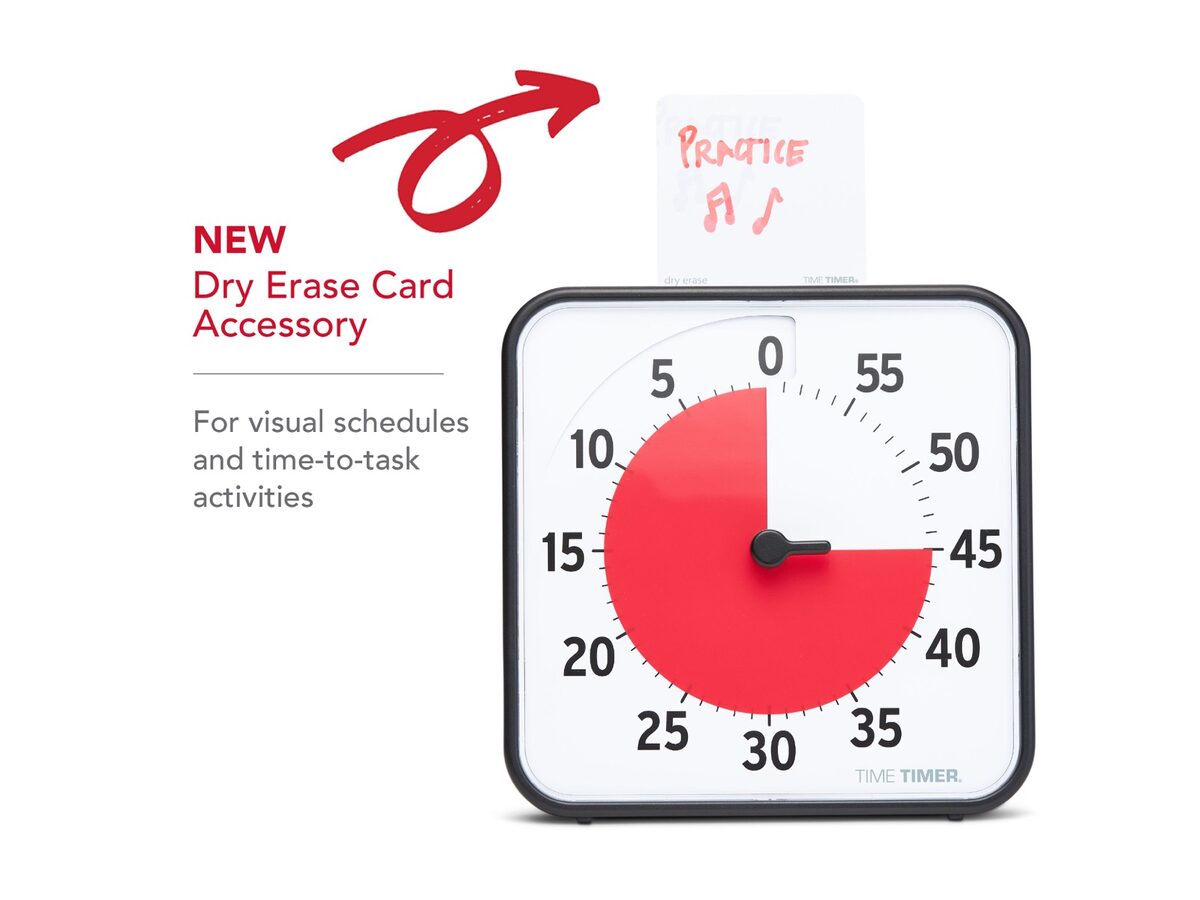
First, a visible clock. Checking the computer clock pulls your attention off the work. A countdown timer with a shrinking colored disk lets you see the session at a glance.
-
Time Timer
Time Timer
Red wedge shrinks as minutes pass—time left at a glance, no mental math on a digital clock.
Time Timer
Time Timer
Red wedge shrinks as minutes pass—time left at a glance, no mental math on a digital clock.
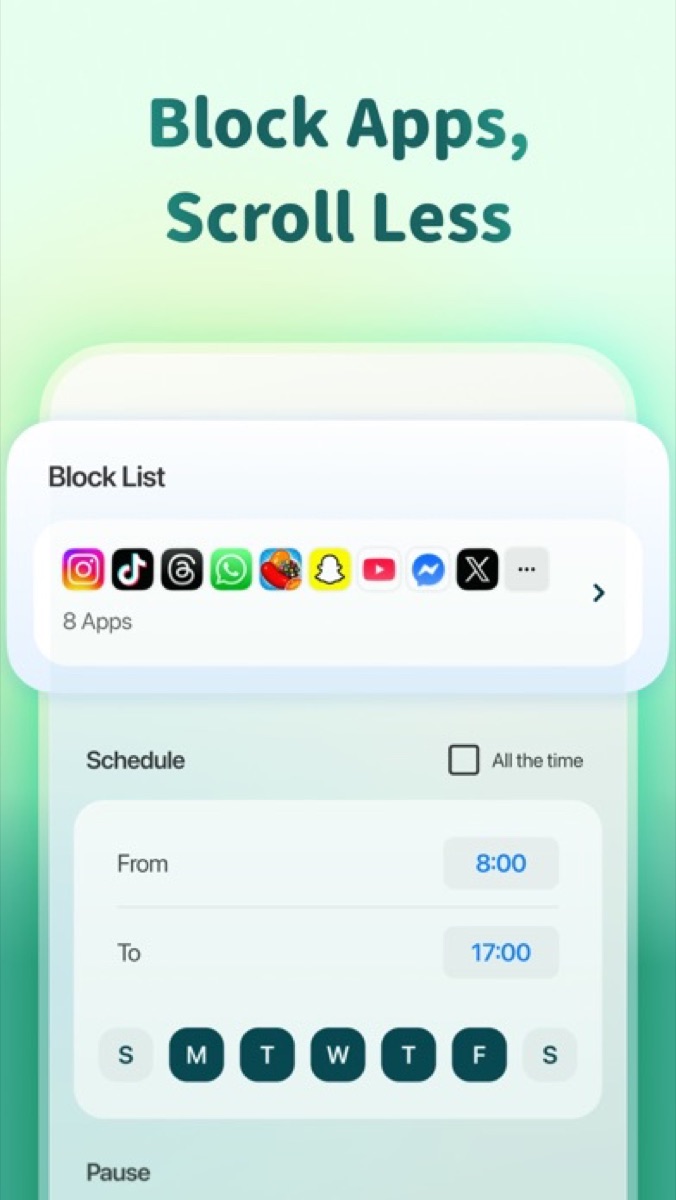
Second, get your phone away from you. It's easy to scroll under the desk while your webcam's on. Forest grows a virtual tree while you stay off your phone, and leaving the app kills it. It's a bit childish and it works for plenty of people.
-

Forest
Seekrtech
Stay off the phone to grow a tree; break the session and the tree dies—a silly stake that still works.


Forest
Seekrtech
Stay off the phone to grow a tree; break the session and the tree dies—a silly stake that still works.
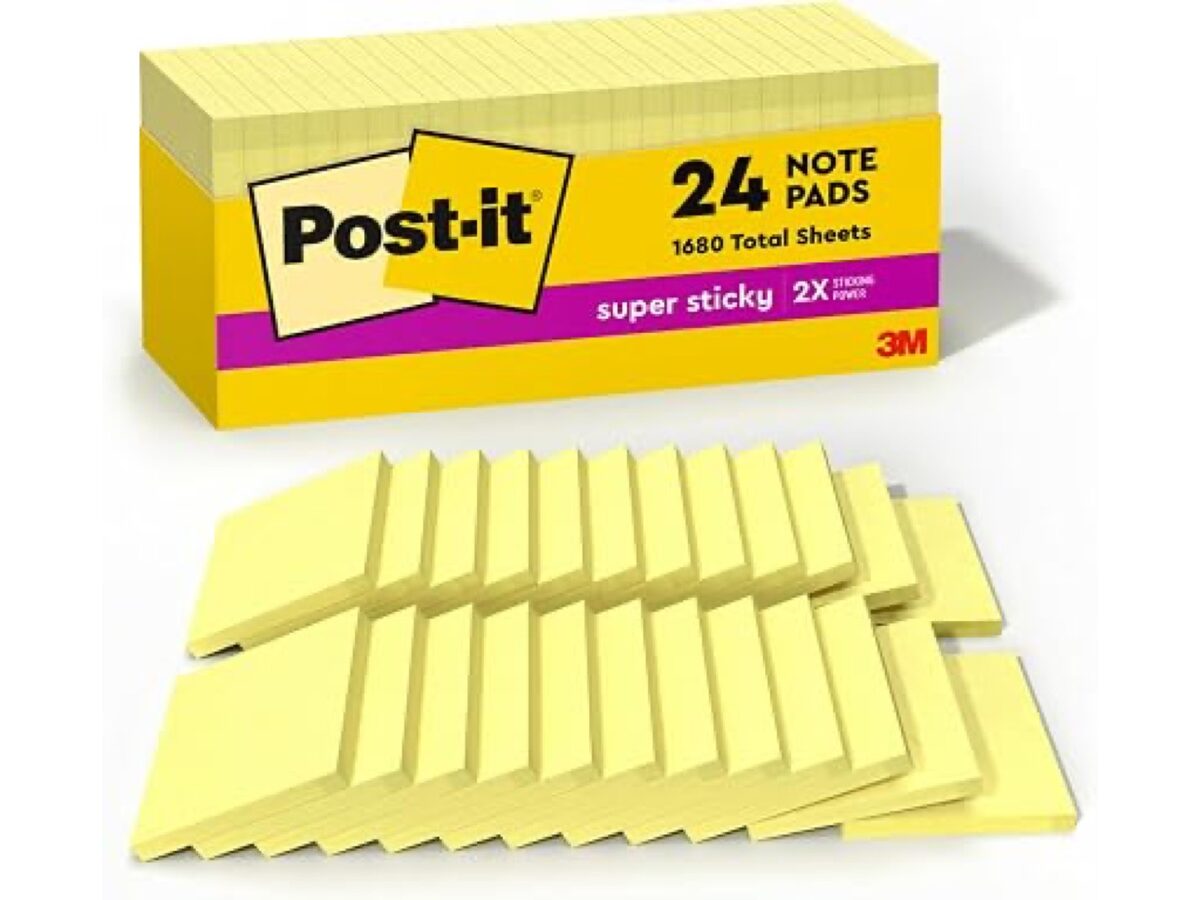
Third, one narrow goal. "Work on report" invites drifting. Write a single physical action on a sticky note and stick it to your screen.
-
Post-it Super Sticky Notes
3M
Sticks to monitors and walls—one task per note so your eyes trip over the next step.
Post-it Super Sticky Notes
3M
Sticks to monitors and walls—one task per note so your eyes trip over the next step.
If you're thinking about pacing, our guide to Pomodoro alternatives for ADHD has options that don't punish you for losing the thread.
How do you set up your first session?
- Pick the right task. Choose something routine or overdue: receipts, an inbox, sorting mail, laundry. Skip anything where you don't know the first step.
- Define the finish line. "Taxes" is too vague. "Download January to December bank statements" works. So does "clear clothes off the chair" instead of "clean room."
- Keep intros under ninety seconds. Say hello, name your output, confirm the end time. No backstory or apologies.
- Mute your audio and set your camera at desk height. Your partner should see you working. Muting keeps typing noise from breaking anyone's concentration.
- Report plainly at the end. Say what you got done. If it was only part, say that. No excuses needed.
Pair this with what you know about ADHD time blindness so you don't cram three hours of work into a 50-minute block.
When does body doubling backfire?
It doesn't suit everyone. Three situations come up.
Social anxiety is the first. If being on camera makes you tense or self-conscious, it's the wrong tool. Try a silent study stream where nobody sees you.
The second is the chatty partner. Two friends with ADHD can turn a comment about an email into a forty-minute debate. If that happens, switch to strangers or agree on a strict silent timer.
The third is difficult work. Going by Bond and Titus, an audience can hurt on unfamiliar, complex tasks. If you're learning new programming syntax or drafting a dense legal brief, someone nearby may distract you. Save body doubling for admin and routine work.
FAQ
What's the difference between body doubling and coworking?
Coworking usually means sharing an office, with conversation and collaboration. Body doubling is a deliberate focus technique: people work quietly on separate tasks to reduce the friction of starting.
Does the body double need to do the same task?
No. They can read, wash dishes or sketch while you balance a budget. What matters is the shared presence, not the shared task.
Can it work if the other person isn't working?
It can. Someone reading or cooking nearby may do the job, as long as they don't interrupt you. Cleveland Clinic's description includes people doing their own tasks alongside you, but it hasn't been tested for non-working partners.
Is Focusmate free?
Focusmate says it's free for up to three sessions a week with no credit card. The Plus plan with unlimited sessions costs $8 a month billed annually or $12 billed monthly, based on the company's pricing page at the time of writing.
Sources
- “It Was Something I Naturally Found Worked and Heard About Later”: An Investigation of Body Doubling with Neurodivergent Participants (opens in a new tab) – ACM Transactions on Accessible Computing, 2024
- Reading Between the Lines: Exploring Body Doubling in ADHD Using EEG (opens in a new tab) – Proceedings of the 27th International ACM SIGACCESS Conference on Computers and Accessibility (ASSETS), 2025
- The ADHD Body Double: A Unique Tool for Getting Things Done (opens in a new tab) – Attention Deficit Disorder Association (ADDA), originally 1996
- Social facilitation (opens in a new tab) – Science, 1965
- Social facilitation: a meta-analysis of 241 studies (opens in a new tab) – Psychological Bulletin, 1983
- How Body Doubling Helps With ADHD (opens in a new tab) – Cleveland Clinic, 2023
- Pricing (opens in a new tab) – Focusmate, 2026
- How It Works (opens in a new tab) – Focusmate, 2026
- Forest: Stay focused, be present (opens in a new tab) – Seekrtech, 2026
- Innovative & Award Winning Visual Timer (opens in a new tab) – Time Timer, 2026
This guide is general information, not medical advice. If focus problems are getting in the way of work, school, or relationships, talk with a doctor or licensed clinician.