ADHD
ADHD or just distracted? How to tell the difference
Wondering if you have adult ADHD or ordinary distraction? Learn the DSM-5-TR criteria, the childhood-onset rule, the ASRS screener and how evaluations work.
You sit down at 9:00 AM to finish a client report. By 9:20 you've opened twelve browser tabs, wiped coffee grounds off the counter, answered three Slack messages and started researching standing desks. The report hasn't moved.
Then the question lands: do I have ADHD, or am I just distracted? A decade ago, adults wrote chronic disorganization off as poor discipline. Now short videos tell you that forgetting your keys or daydreaming in meetings means you're neurodivergent.
The confusion is everywhere. CDC data from the National Center for Health Statistics Rapid Surveys System estimated that about 15.5 million U.S. adults had a current ADHD diagnosis in late 2023, and more than half of them were diagnosed after turning eighteen. To work out whether your problem is ADHD or just distracted living, you have to look past relatable clips and at how clinicians actually decide.
ADHD or just distracted: what separates a diagnosis from daily noise
Everyone gets distracted. Everyone walks into a room and forgets why. Everyone puts off taxes, loses their phone and drifts in a dull meeting. Brains weren't built for hundreds of push notifications on top of open-plan office noise.
What separates ADHD from that is severity, persistence and how much it interferes with your life.
Without ADHD, distraction tends to follow outside pressure. Sleep five hours a night, go through a breakup or juggle three deadlines, and your executive control drops. When the crisis passes, or you finally catch up on rest over a quiet weekend, focus usually comes back.
With adult ADHD, the friction doesn't take a vacation. ADHD is generally understood as a condition involving differences in how the brain regulates attention and behavior, with brain circuitry and dopamine signaling both implicated, and not simply a reaction to a crowded schedule. People with ADHD don't lack attention altogether. They struggle to regulate it. Someone might find it impossible to start a high-priority invoice, yet spend six straight hours researching an obscure hobby.
The American Psychiatric Association sets out the criteria in the DSM-5-TR. For people 17 and older, you need at least five symptoms of inattention, or five of hyperactivity-impulsivity, that have lasted at least six months.
Typical examples include chronic disorganization, careless mistakes, unfinished tasks, severe procrastination, misplaced items and constant forgetfulness. Having two or three during a rough week doesn't meet the bar. They have to be frequent, long-lasting and disabling.
The childhood onset rule: why history matters
This is the main clinical dividing line between adult ADHD and modern distraction: your childhood.
Under DSM-5-TR, several symptoms must have been present before age 12. If school and your teens went smoothly, with steady focus and tidy habits, a sudden slump in concentration at 35 points more toward something else. Think chronic sleep debt, severe anxiety or a medical issue, which we cover in why can't I focus.
So why do so many people get evaluated in mid-adulthood?
Plenty of bright kids get through school because outside structure covers for their executive struggles. Parents enforce bedtimes and pack backpacks. Teachers run tight schedules. A mostly inattentive child can daydream through class without disrupting anyone and get labeled a "quiet dreamer" instead of being evaluated.
Things often break down at life transitions: leaving home for university, starting an unstructured job, having kids. The guardrails vanish and your own planning, working memory and time management have to carry the load. If they can't, everything buckles.
Clinicians who evaluate adults look backward. They ask about old report cards and how you handled homework in fourth grade. CHADD notes that several symptoms must have been present before age 12 and that clinicians often review school records. Without that early history, the diagnosis can't be made under current criteria.
Pervasiveness across settings: work, home and relationships
A second pillar is pervasiveness. DSM-5-TR requires that symptoms show up in two or more settings.
Say you lose focus only at your desk doing data entry, but you manage your finances, keep up hobbies, tidy your home and show up on time for friends. ADHD is much less likely. A job that bores or drains you is the better suspect.
ADHD tends to follow people around:
- At work: Abandoned assignments, chronic procrastination, missed meetings, cluttered workspaces.
- At home: Unopened mail piling up, expired groceries, laundry forgotten in the washer until it smells.
- In relationships: Zoning out while a partner talks, interrupting, not following through, being late because of time blindness.
- In personal care: Missed dentist appointments, lost track of medications, skipped meals while hyperfocused on a screen.
When trouble is limited to one area, environmental friction is usually the cause. ADHD spills into everything.
The WHO ASRS screener: what it measures and what it misses
Many adults start with an online questionnaire. The best-known one is the World Health Organization Adult ADHD Self-Report Scale (ASRS v1.1).
The WHO developed it with researchers including Dr. Ronald C. Kessler of Harvard Medical School and Dr. Lenard Adler of New York University. The screener has six questions drawn from an 18-question symptom checklist. They ask how often over the past six months you've struggled with wrapping up project details, getting organized, remembering appointments, avoiding mentally demanding tasks, fidgeting and feeling driven by a motor.
Answers run from never to very often. Under the standard scoring, four or more answers in the shaded zone count as a positive screen.
What it is: a useful way to spot adults who should get a thorough interview.
What it isn't: a test that gives you a diagnosis.
Screeners lean toward sensitivity so they don't miss cases. They measure current behavior, not causes. Someone with severe anxiety, depression, sleep apnea or burnout can easily score four or more. A positive result means your focus is strained right now. It doesn't say why.
The TikTok effect: about half of viral ADHD advice is misleading
Short videos that claim to decode adult attention problems are everywhere. They've reduced stigma and pushed some people toward care. They've also blurred the line between ordinary quirks and psychiatric conditions.
A study in the Canadian Journal of Psychiatry by Anthony Yeung, Enoch Ng and Elia Abi-Jaoude analyzed the 100 most popular ADHD videos on TikTok, which averaged 2.8 million views each. Their findings:
- 52% were classified as misleading.
- 27% were personal experience.
- 21% were useful.
Non-healthcare creators uploaded most of the misleading ones. Among those, 71% attributed symptoms that occur in many conditions, such as anxiety, depression, anger, relationship conflict, dissociation and mood swings, to ADHD alone. None of the misleading videos told viewers to seek a professional assessment first. In other words, they treated everyday experiences that most people have as signs of ADHD.
That cuts both ways. People with disabling ADHD see their condition turned into a lifestyle quirk. Meanwhile someone with burnout or poor sleep jumps to the wrong conclusion and misses the real cause.
Conditions that can look like adult ADHD
When your brain is overloaded, working memory slips, focus fragments and motivation drops. Several conditions overlap heavily with ADHD:
- Chronic sleep deprivation: Five or six hours a night can produce executive function problems that can closely resemble ADHD on a self-report survey. Sleep apnea is a common cause of daytime fog and distractibility.
- Generalized anxiety: When your working memory is busy scanning for threats and worries, you miss details in conversations and feel swamped by multistep projects.
- Major depression: Depression often impairs processing speed, memory and getting started. Staring at an unwashed dish, unable to stand up and wash it, can come from depressive slowing rather than ADHD paralysis. For how task initiation works, see ADHD paralysis and how to start.
- Digital fragmentation: Chopping your day into slivers of email, chat and notifications trains your brain to expect novelty. Gloria Mark's research found people spend about 47 seconds on a screen before switching (we break it down in short-form video and attention span). Reading a dense report after that feels painful, but that can be an acquired habit and not a disorder.
What an adult ADHD evaluation actually involves
If symptoms are persistent, show up at home and at work and trace back to childhood, a professional evaluation is the right next step.
A proper evaluation is thorough. It doesn't happen in a fifteen-minute primary care slot or through a website form that auto-prescribes stimulants. CHADD says diagnosis draws on multiple sources: symptom checklists, standardized rating scales, a detailed history and information from family or others who know you well.
Qualified evaluators include licensed clinical psychologists, psychiatrists, neurologists and specialized psychiatric nurse practitioners.
Expect it to take a while, often several hours and sometimes over more than one session. The clinician will interview you about your history, check for childhood symptoms through school records or family, gather input from a partner or someone close, use validated rating scales and rule out medical or mood explanations. You should end up with a written report with conclusions and recommendations.
Building structure while you seek answers
Whether it's ADHD or a demanding lifestyle, willpower alone rarely holds. Distractible minds do better with external systems that make time visible.
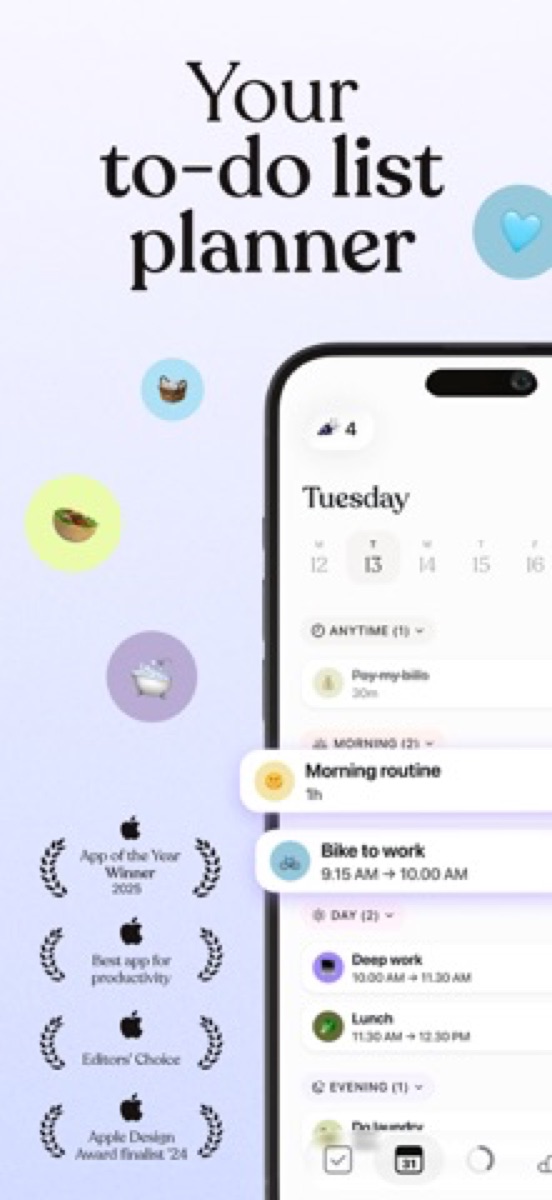
Skip the complicated productivity app that needs hours of setup. You'll abandon it. A visual timeline of today's hours on one vertical track works better because it removes the guesswork about how long you have before your next commitment.
-

Tiimo
Tiimo ApS
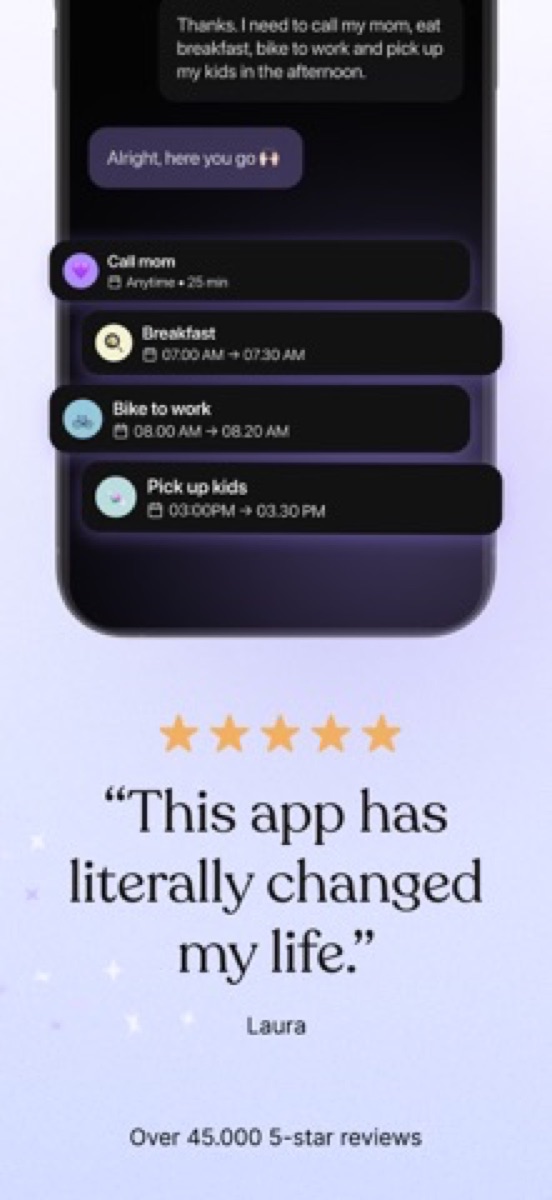
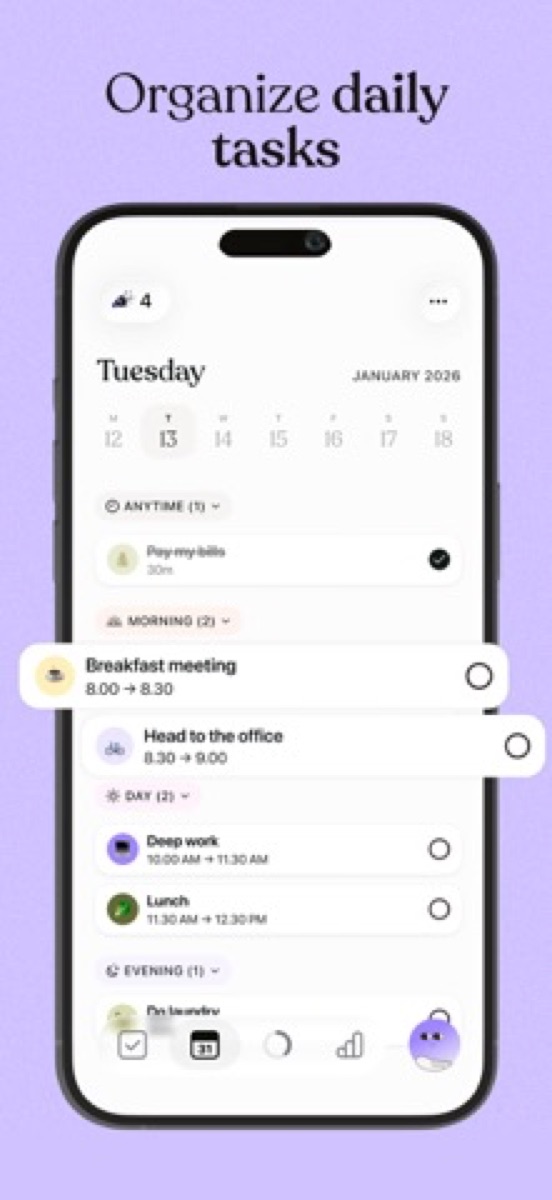
Color-coded day plan on a timeline—easy to see gaps, overlaps, and how much day is left.
Tiimo
Tiimo ApS
Color-coded day plan on a timeline—easy to see gaps, overlaps, and how much day is left.
Tiimo suits neurodivergent and chronically scattered people alike because it shows the day visually. Instead of a twenty-item checklist, you see time laid out in color-coded blocks. Knowing you have 35 minutes before your next call makes it harder to vanish into a rabbit hole.
A few simple boundaries also help:
- Close chat apps during focus blocks.
- Put commitments on paper or on a calendar, not in your head.
- Protect eight hours of sleep opportunity for two weeks and see whether focus sharpens.
- Clear visual clutter from your workspace.
If attention problems keep getting in the way despite good sleep, a steady routine and a manageable workload, get assessed. A clinician can help find the root cause, whether it's ADHD or something else.
FAQ
Can you develop ADHD as an adult for the first time?
Under DSM-5-TR, symptoms must begin before age 12, so the manual doesn't recognize true adult onset. Many people are diagnosed late because coping strategies stopped working, not because ADHD started then. Researchers have debated whether late-onset cases exist, but clinicians check for other causes first, including sleep loss, stress, mood disorders and medical problems.
What is the difference between ADHD inattention and ordinary brain fog?
ADHD inattention is a long-standing pattern of trouble regulating focus and organizing tasks across settings, going back to childhood. Brain fog is a temporary dullness that moves with sleep, stress, illness recovery or nutrition. It often improves once the underlying cause is dealt with.
How accurate are online adult ADHD tests?
Screeners like the WHO ASRS v1.1 are useful for screening, but they can't diagnose ADHD. They show whether your current struggles match common ADHD patterns. They can't confirm childhood onset or rule out anxiety and depression. A high score is a reason to see a professional.
What should I do if my ASRS screener score is high?
Take your results to a primary care doctor or a licensed mental health professional. Bring examples of how focus problems affect home and work, plus any childhood records. Your doctor can check for physical causes and refer you to an experienced evaluator.
Sources
- Clinical Care of ADHD in Children and Adults (opens in a new tab) – Centers for Disease Control and Prevention, 2024
- Attention-Deficit/Hyperactivity Disorder Diagnosis, Treatment, and Telehealth Use in Adults (opens in a new tab) – Centers for Disease Control and Prevention Morbidity and Mortality Weekly Report, 2024
- TikTok and Attention-Deficit/Hyperactivity Disorder: A Cross-Sectional Study of Social Media Content Quality (opens in a new tab) – The Canadian Journal of Psychiatry, 2022
- The World Health Organization adult ADHD self-report scale (ASRS): a short screening scale for use in the general population (opens in a new tab) – Psychological Medicine, 2005
- Diagnosis of ADHD in Adults (opens in a new tab) – Children and Adults with Attention-Deficit/Hyperactivity Disorder (CHADD), 2024
- The adult ADHD assessment quality assurance standard (opens in a new tab) – Frontiers in Psychiatry, 2024
- DSM-5 Diagnostic Criteria for ADHD (opens in a new tab) – American Psychiatric Association, 2013
This guide is general information, not medical advice. If focus problems are getting in the way of work, school, or relationships, talk with a doctor or licensed clinician.